


Planning a 100 person company retreat in Thailand starts with a fairly ordinary question: can we get everyone into the same place, comfortably, with enough time to make the trip worthwhile? If yes, then it’s time to start seriously breaking down what you need from your company retreat.
Then the details start to filter through, as some colleagues want to extend their stay past your official date, some what to stay out after the evening entertainment, three early flights (from different timezones) land within an hour of each other. Someone needs a different room arrangement. The restaurant has space for 100, but only if part of the group sits outside, and there has been some last minute allergies declared.
None of these issues is unusual for experienced offsite teams`. The difficulty is keeping them connected, so a change to one booking reaches everyone who needs to know about it.
This guide covers the operational side of bringing roughly 100 colleagues together in Thailand. We talk about attendee information, rooming lists, airport transfers, meals, meeting spaces and communications and even the unexpected. It is a company retreat planning framework, and not a claim about a particular client event.
What changes when a company retreat reaches 100+ people?
At this size, small arrangement changes become more complicated to manage. You cannot rely on everyone hearing an announcement over breakfast or spotting a last-minute message in the group chat.
The basics need to be clearly written down: who is attending, where they are staying, how they are arriving, which services are confirmed and who can approve and communicate these changes. Delegate each part to an owner, then agree how updates move between the internal organiser, the retreat planner and the suppliers you have chosen.
- One controlled attendee record with all necessary data and access restrictions.
- A rooming list agreed and clearly checked with the hotel.
- Arrival and departure manifests for each transfer.
- A schedule that includes setup and travel time and buffers for when things done run to plan.
- A clear contact for participants, emergency numbers and a separate operations contact list.
- A clear process for approving additional costs on the fly.
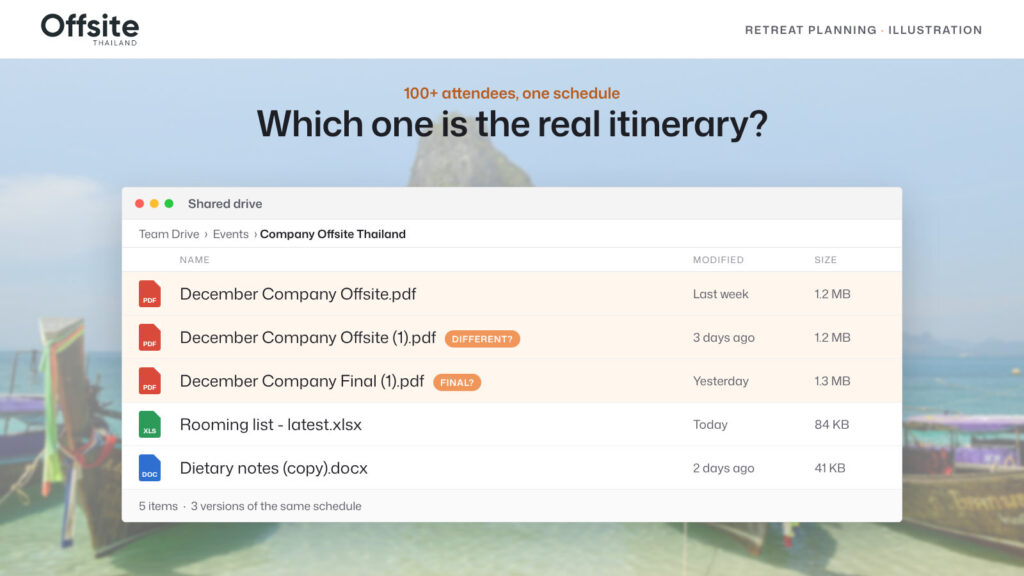
The aim is not to produce more paperwork or make the retreat process become more complicated. It is to stop the same question being answered differently by three people, or ending up with three variations of retreat schedules in three different folders.
1. Confirm the brief before requesting venue proposals
“Approx 100 people for a few days” is enough to begin a conversation about your company retreat, but not enough to compare meaningful proposals from offsite vendors. Before narrowing the options, decide which requirements are essential and which are more open flexible.
Start with the likely headcount (and this will gradually change right up to the last minute), preferred dates, number of nights, room-sharing policies and of course purpose of the trip (which you probably already know). A retreat built around a full-company workshop or strategy needs a different setup from a celebration with only a two hour presentation before the fun begins.
Define the budget in one currency and state whether it includes flights, taxes, service charges and end-to-end planning fees. Record assumptions about single occupancy, alcohol availability, meeting equipment and optional activities. Otherwise, a cheaper-looking proposal may simply include less.
Our company retreat cost breakdown article covers the wider budget. For this stage, the important thing is giving every shortlisted supplier the same brief, otherwise it can be more complicated for you or the company decision maker to track.
If attendance is still uncertain, ask how pricing and availability change at different a different headcount. Get the deadlines for reducing rooms, confirming meals and adding participants in writing. At Offsite Thailand, we quote per head, making it simple and transparent to adjust the headcount up until the final 4 weeks (in most cases).
2. Choose the company retreat destination around the journey and programme (and budget)
For a group this size, the destination decision includes much more than the hotel. Map where colleagues are travelling from, which routes they can reasonably use and how much of the first and last days will disappear into travel.
A Singapore-based company may still have attendees departing from several countries. Do not assume everyone has the same flight options, passport or entry requirements because the head office is in Singapore.
Compare the complete journey: departure airport, connections, arrival airport and onward transfer. For a short company retreat (such as 3 days, 2 nights), an additional travel stage deserves particular scrutiny.
Use our Chiang Mai, Phuket and Bangkok retreat comparison for the destination discussion. If your team is organising from Singapore, the Thailand corporate retreat planning guide for Singapore teams provides more specific context.
Once the destination is shortlisted, check actual flight options for your dates. Do not build the programme around an old timetable or a route that operates only on selected days.
3. Check whether the venue works for the whole group
A property can have enough bedrooms without having a suitable space for your main session. You can request a floor plan showing your intended layout, not just the venue’s maximum advertised capacity.
One hundred seats facing a stage is a different requirement from tables for collaborative work. Allow space for movement, equipment, refreshments and perhaps anyone tuning in remotely. Check whether breakout groups can work without disturbing each other.
TCEB’s Thailand MICE Venue Standard publication provides background on systematic venue assessment. Use it as a reference for confirming the particular room, services and arrangements being offered.
- Ask the vendor whether meeting, dining and activity spaces are private or shared.
- Confirm setup and access times, including any evening preparation.
- Check screen visibility, microphones, power connections and Wi-Fi requirements.
- Walk through the route between bedrooms, timing, sessions and meals.
- Identify an indoor alternative for every weather-dependent group session if you are attending during the Thai rainy season.
Also ask what else is happening at the property. A wedding, another conference or public restaurant service may affect noise, access and the spaces available to your group.
4. Build the attendee record without oversharing personal information
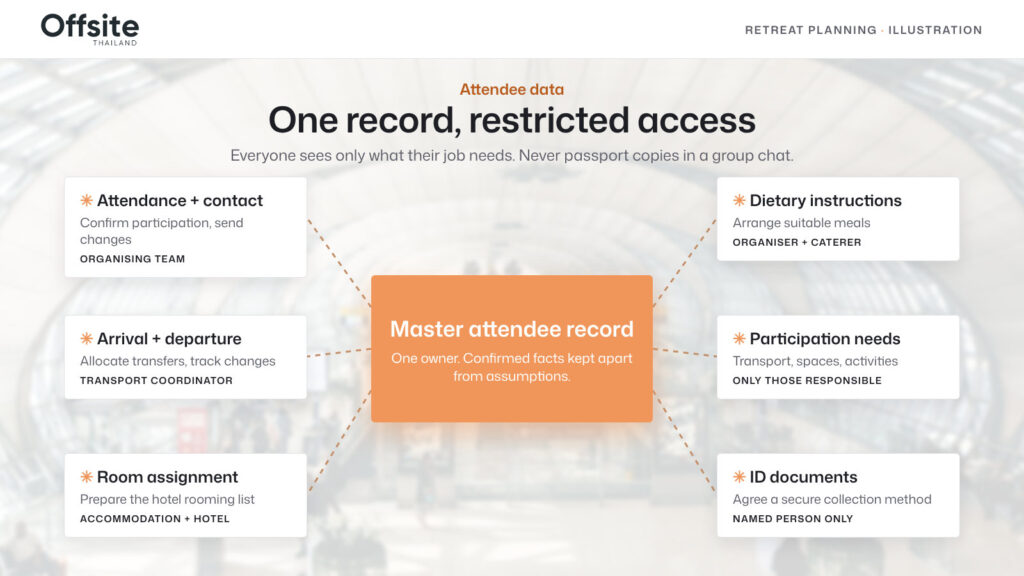
Choose one master attendee record and appoint someone to maintain it, or in a small company this may be your responsibility. Other people can supply updates, but the approved version needs to be clear.
The record should distinguish confirmed information from assumptions. “Expected to attend” is not the same as a booked flight, and a preferred roommate is not necessarily a confirmed room allocation. Dietary requirements such as severe allergies should be obtained as early as possible and double checked.
| Information | Why it is needed | Who needs access |
|---|---|---|
| Attendance and contact details | Confirm participation and communicate changes | Authorised organising team |
| Arrival and departure details | Allocate transfers and monitor changes | Travel and transport coordinators |
| Room assignment | Prepare the hotel rooming list | Accommodation coordinator and hotel |
| Dietary instructions | Arrange suitable meals | Relevant organiser and catering team |
| Participation requirements | Arrange appropriate transport, spaces and activities | Only those responsible for the arrangements |
A single source of truth does not mean a spreadsheet that everyone can see. Keep sensitive information restricted and give suppliers only what they need. Where identity documents are required, agree a suitable collection method rather than posting passport copies into a group chat.
5. Resolve the rooming list before arrival day
For 100 attendees, single occupancy means 100 rooms. Twin sharing could mean 50 rooms if everyone shares in pairs, but the actual requirement depends on your policy and individual arrangements.
Confirm the difference between twin beds and a double bed. They are not interchangeable for colleagues sharing accommodation. Check accessible-room requirements, additional nights and any need to place people close to meeting facilities.
If sharing is expected, explain it before booking. It is worth giving employees a private route to raise concerns instead of asking them to explain themselves publicly, as this can cause frustration even before the offsite has begun.
Then agree the practical details with the hotel: the rooming-list deadline, how amendments are handled, check-in requirements and who pays for incidentals. Establish clearly what happens if an attendee arrives early but the room is not ready.
On arrival day, the hotel reception team should already know the group arrangement. The internal organiser should not be reconstructing room assignments beside a queue of tired colleagues.
6. Arrange airport transfers around arrival waves
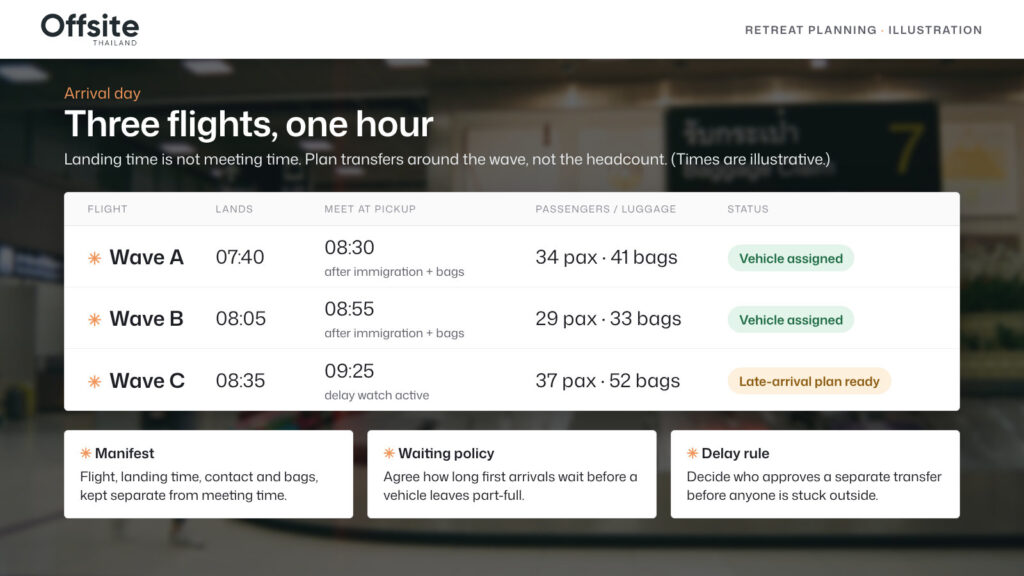
Build the arrival manifest before deciding the vehicle plan. Record the airport, terminal, flight number, arrival date, landing time and passenger contact. Keep landing time separate from the expected meeting time after immigration and baggage collection.
Group passengers sensibly, but do not make the first arrivals wait indefinitely to fill a vehicle. Agree a waiting policy, a late-arrival procedure and who can approve a separate transfer.
Vehicle selection needs to account for luggage as well as seats. Confirm usable capacity, seat belts, driver arrangements and any access requirements directly with the transport provider. Do not calculate the booking from the passenger count alone.
Each passenger should receive a short set of instructions: where to meet, what sign to look for, who to contact and what to do if they cannot find the representative. Each vehicle should have an assigned manifest and a confirmed passenger check before departure.
Example Scenario to consider:
Two flights are scheduled to arrive close together, one from Indonesia and one from Singapore. What happens one or both is delayed? You should have pre-planned a contingency for this situation in advance.
7. Keep entry guidance separate from transport information
Send travellers official entry-information links rather than circulating a blanket statement that everyone can enter on the same basis or they need to go looking for. Nationality, travel purpose and individual circumstances matter.
The Thai Immigration Bureau’s Thailand Digital Arrival Card guidance explains the submission process and the three-day submission window before arrival, including the arrival date. The arrival card does not replace checking whether a traveller needs a visa or other permission.
Ask attendees to check the current requirements through official channels before travel. Provide confirmed hotel details where needed for their arrangements, but avoid collecting additional personal information to monitor the completion.
For Singaporean attendees, the Singapore Ministry of Foreign Affairs Thailand travel advice is also a useful resource for travel notices, insurance advice and consular contacts. Colleagues of other nationalities should consult the appropriate official sources for their circumstances.
8. Plan meals as a service, not just a menu
For a 100-person group, “lunch at noon” leaves several questions unanswered. Where does everyone sit? How is food served? How are dietary meals identified? Can the next session start on time without rushing people through lunch?
You will have pre-planned a lot with the restaurant venues before, now ask the venue to explain its proposed service arrangement. A buffet might suit the programme, but its position, access and replenishment still need thought. A seated meal needs a clear method for serving the correct dishes to the correct guests.
Discuss allergies directly with the caterer, including ingredients, preparation and possible cross-contact. Do not promise that something is allergen-free without confirmation from the supplier. Establish who handles a dietary question during service. At Offsite Thailand we have a strict process to ensure all restaurants are vetted for suitability in handling allergies and we even display severe allergen information on the lanyards if needed.

Confirm water, non-alcoholic drinks and what happens when the planned drinks allowance ends. Decide whether extra orders are charged to the company or the individual, and tell people beforehand.
Also check late-arrival meals. A colleague whose flight lands after dinner still needs to know whether food is available, where to get it and who is paying.
9. Give activities a workable group format
An activity that suits 15 people does not automatically work for 100. Ask the operator how the group will be organised, how instructions are delivered and what participants do while waiting for their turn.
Some programmes work better with smaller groups rotating through stations. If that is the plan, name the groups, identify their meeting points and allow time to move between sessions. Make sure every facilitator is working from the same timetable.
Explain physical demands before people choose an activity. Offer suitable alternatives where needed, and check transport and venue access as part of the arrangement.
The W3C accessible-events checklist recommends asking participants about accessibility requirements and considering venues, materials, sound and scheduling. Those checks apply to the working sessions as well as the afternoon programme.
Our company retreat activities in Thailand guide can help with ideas. For a larger group, our Thailand team-building planning service can help turn the shortlist into a practical format.

10. Separate the attendee schedule from the operations schedule
Attendees need to know where to be, when to arrive, what to bring and whom to contact. They do not need the catering setup instructions or the supplier’s vehicle allocation.
The operations team needs a more detailed running order. Include room access, equipment checks, supplier arrival times, meal readiness, departure checks and the person responsible for each handover.
Publish one current attendee schedule in a place everyone can access. If chat is used for announcements, explain whether questions belong there or should go to a help contact. Include a way to get essential details if someone has no mobile data.
For changes, agree who makes the decision and who sends the update. A facilitator should not announce a revised finish time before transport and catering have been told.
11. Put contingencies and spending authority in writing
A useful contingency plan names the trigger, decision-maker and alternative. “We will move inside if it rains” is incomplete unless the indoor space is available, large enough and ready to use.
Walk through the likely disruptions: a delayed flight, an absent speaker, a vehicle problem, an unavailable room or an attendee who needs medical assistance. Confirm the local response arrangements and keep emergency contacts accessible to the people running the event.
Check transport and activity providers’ relevant licences, insurance and operating arrangements. Ask attendees to review their own travel cover, particularly for planned activities, rather than assuming the event booking covers every personal circumstance.
Set a spending approval process too. Who can authorise an additional vehicle or a replacement meal, and how is the expense recorded? Agree this before the person managing the situation has to choose between waiting for approval and helping the group.
12. Work backwards from departure day
Agree a booking timeline with the venue and planner rather than relying on a single rule for every retreat. Dates, room inventory, exclusive spaces and the complexity of the programme all affect how early decisions are needed.
The sequence below is a working order:
| Stage | What to resolve |
|---|---|
| Before committing | Brief, budget assumptions, venue suitability, booking terms and approval process |
| After booking | Registration, travel collection, rooming policy and initial programme |
| Before supplier cutoffs | Confirmed numbers, room allocations, dietary arrangements and activity groups |
| Final pre-event check | Arrival manifests, running order, contacts, equipment and contingency arrangements |
| Before departures | Flight checks, checkout, luggage, transfer manifests and final payment responsibilities |
Give each deadline an owner. Where information is missing, record the next action rather than leaving a blank cell that nobody notices until the final check.
Common questions about a 100 person company retreat
Should everyone stay at the same hotel?
If possible, it’s always best, especially when shared sessions and meals are central to the trip. If the group is split across properties, account for the extra transfer time, meeting points and communications. Compare the complete arrangement, not just the room rate.
How many vehicles will we need?
There is no reliable answer from headcount alone. The booking depends on arrival waves, luggage, vehicle capacity, accessibility requirements and the programme. Ask the provider for an allocation based on the actual manifests.
Does everyone need to attend every activity?
Decide which working sessions are required and which activities are optional, then communicate that distinction. Where an alternative is needed, plan something suitable rather than leaving someone without a place to go.
Can we start planning before the headcount is final?
Yes. Share a realistic range and identify when attendance will be confirmed. Ask the planner and venue which commitments can remain flexible and which need a firm decision. Availability is not guaranteed until the relevant arrangements are confirmed.
Plan the retreat without becoming its full-time help desk
At Offsite Thailand, we plan and host company retreats with venue sourcing, accommodation, transport, food, meeting arrangements, activities and on-the-ground support. Our hospitality background shapes the work: guests should know where to go, suppliers should know what is expected, and the organiser should know who is handling each detail.
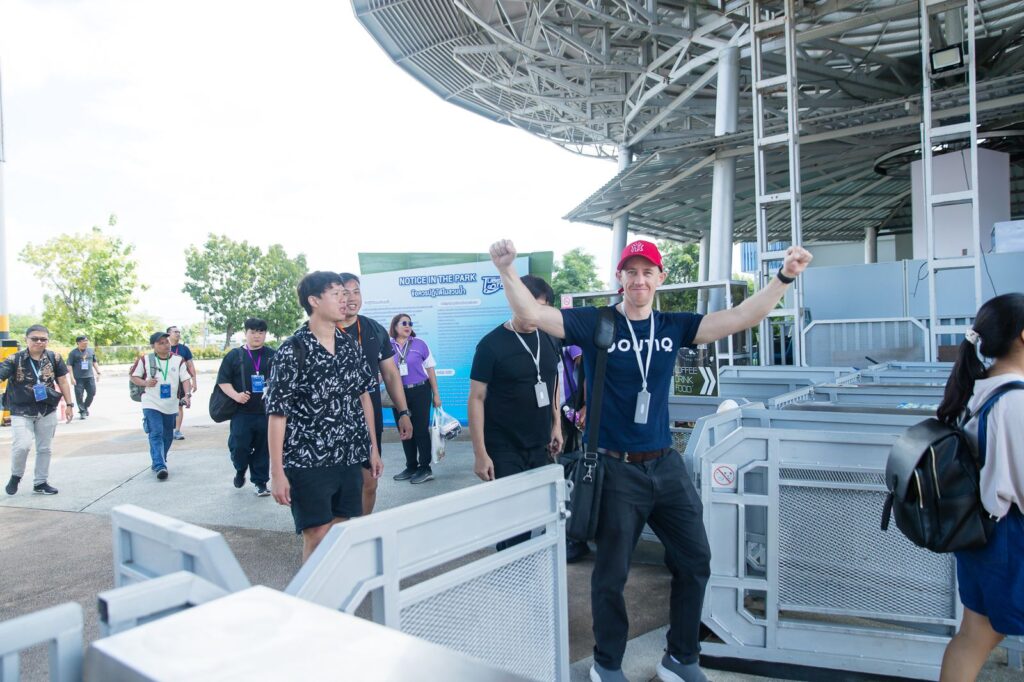
You still make the decisions that belong to your company, including attendance, spending approvals and the purpose of the trip. We help coordinate the arrangements around those decisions and help your team enjoy there trip.
If you are planning a 100 person company retreat in Thailand, send us your approximate dates, number of nights, departure cities and room preferences. Let us know what you want the team to achieve, and which details are still undecided.
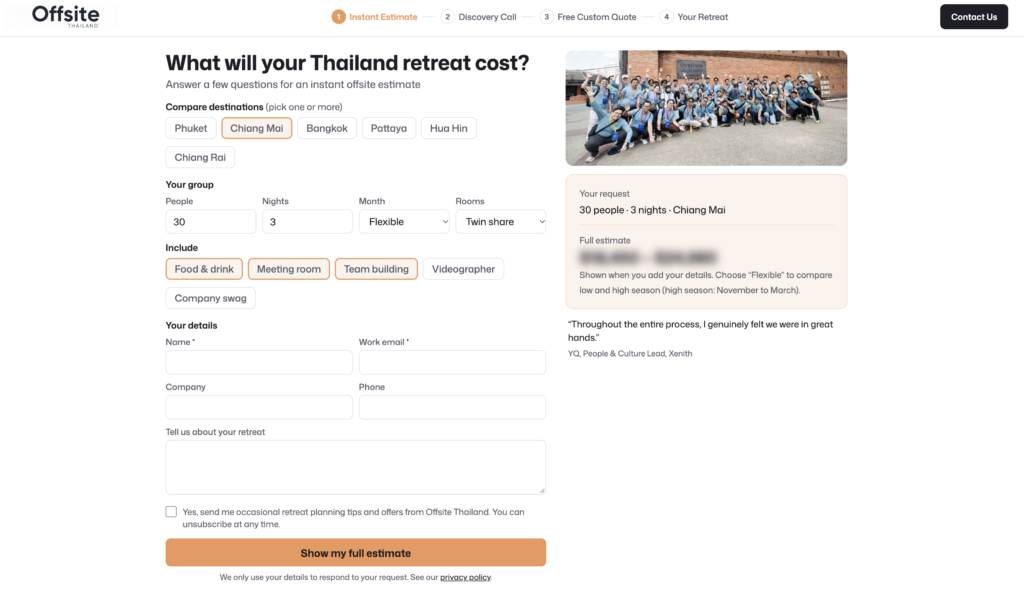
or read how Offsite Thailand plans and hosts retreats before getting in touch.