


How do you reward your top performing teams? If they are a sales team they likely already have bonus targets, but there is a new trend in 2026 which sees companies offering additional rewards to teams and departments, and this is called Incentive Travel.
Let’s take the following scenario. Your sales team just closed the best quarter in company history, or perhaps the product team finally shipped the thing they’d been grinding on for a year on the edge of burn-out. Good leadership should recognise the hard work and in doing so realise that they need to reward the people behind success.
This is the start of where incentive travel ideas begin. This is not a a normal offsite, and it shouldn’t be treated directly like one either. After a year of working hard, nobody wants trust falls (although it’s worth mentioning that Offsite Thailand never does boring team-building exercises like these anyway). The actual concept for this overseas team retreat is closer to making memorable moments between employees, and switching off for at least a few days as a hard-earned reward before going back to work fully refreshed. When combined with good Thai food, great hospitality and a cultural escape, this is a fantastic way to reset.
So where does incentive travel in Thailand come in? Well, Thailand ends up on the shortlist almost every time for nearby countries such as Singapore, Hong Kong and Malaysia. But planning incentive travel and MICE (Meetings, Incentives, Conferences, Exhibitions) in Thailand is very different from booking a standard company retreat, even though people lump the two together constantly. Below is where the two actually diverge, what a good incentive trip tends to look like once it’s on the ground, and where planners usually trip themselves up trying to treat these as the same project.
What is MICE for Incentive Travel
MICE stands for Meetings, Incentives, Conferences, and Exhibitions. Thailand’s tourism board uses this for corporate travel with a business purpose attached, which works for industry statistics but may not be perfect for budgeting overseas travel such as corporate reward retreats.
Incentive travel to Thailand is a company-funded reward trip, and it is usually for a set group or department of top performers, built around recognition. Generally, this does have agenda items or breakout sessions. If there’s any business aspect built in, it might just be in the form of a CEO welcome or townhall on the first evening of the trip. It might also take the form of an awards dinner or even a short toast from the CEO, but the rest of the trip exists purely to make people feel valued, full stop.
Quite often, employees might have mixed feels about the idea of corporate gatherings, but for incentive travel in Thailand, this completely changes the scope and it will likely be welcomed.
Incentive Travel in Thailand, and the key to budget approval
If you’re planning out of Singapore or Hong Kong, which describes a lot of the people we work with here at Offsite Thailand, the costs for Thailand is a no brainer. Bangkok (for example) is under two and a half hours away and Chiang Mai is not much further. Compared to a long-haul incentive destination like the US and your already winning through earning back a full day travelling each side. Travel is even more complex when you’re moving 40, 60, 80 or 100 people at once (or even syncing to meet at the same time from different remotely distributed locations).
Then there’s cost. A five-star incentive experience in Phuket or Chiang Mai usually comes in well under the same tier of trip to Bali, the Maldives, or even Japan. Part of that is due to supply, and Thailand’s hospitality market is broad enough that you won’t need to compete against other groups for the same handful of properties the way you might on a smaller island (unless it’s high season).
Thailand also is lucky to have a fantastic variety of places, ideal for coporate travel or incentive trips. For a beach trip you can visit Phuket or Hua Hin, or for something relaxed move them up into the mountains around Chiang Mai.

Incentive trip vs. company retreat: not the same brief
We at Offsite Thailand plan both. While every type of trip is never the same (we don’t do cookie-cutter retreats!) but it’s important to distinguish that company retreats and incentive trips are worlds apart.
A company retreat exists to solve something. Perhaps the team or department is fully remote fully remote and had one retreat a year to to meet in person, or maybe leadership wants a strategy reset after closing a round. These type of trips run on structured time, workshops, team-building alignment sessions, facilitated activities — because there’s a job to do, and the venue and offsite team is there to support that.
Incentive travel is the opposite. The reward can often be defined the job, in this case. If you drop team building exercises within an incentive trip, you’ll actually work against your objective, because someone who just earned a five-star trip doesn’t want a trust exercise on day two, they want a private beach dinner, an afternoon at the spa, something they couldn’t book themselves. The key is in the name- incentive.
This is the single biggest mistake we see from in-house teams attempting to plan their first incentive trip. They default to the retreat playbook, because it’s the only one they’ve read or been part of, and the trip ends up feeling like a slightly (more stressed) nicer version of last year’s offsite when it should actually be a reward.
What a strong Thailand incentive itinerary actually looks like
There’s no single template here (we don’t do cookie cutter programs) the right shape depends a lot on who’s traveling and why they are being rewarded. Most of the incentive programs we’ve built tend to fall into the following:
- A quiet arrival day, no programming at all (sorry Claude), so people can actually recover from the flight before anything fun kicks off
- A recognition moment, a dinner, an evening event where the “why we’re all here” actually gets said out loud instead
- Two or three days built around genuinely premium, butoptional experiences: private boat charters, a cooking class with a Chiang Mai chef, a Muay Thai session run by a real fighter instead of a corporate facilitator in gloves
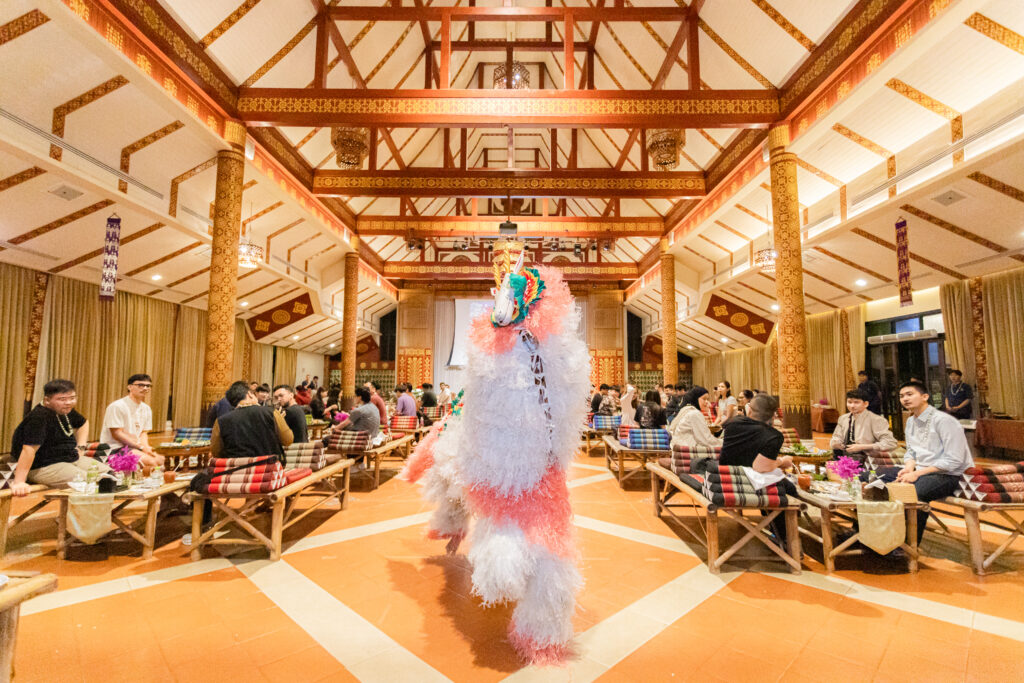
- At least one evening built purely around Thai culture and hospitality, this is, without fail, the thing people bring up months later
- A closing gala night that actually feels like a finale, not just one more group dinner with khao soi before everyone flies home
If the company needs a strategy session or a planning day baked in, it’s usually smarter to run that as its own short block on day one, then let everything after it be the reward. Combining the two rarely dilutes the message and usually doesn’t please management or employees.
Matching the destination to reward
Phuket, and increasingly Hua Hin, tend to win out for beach-forward, luxury-resort incentive trips, especially larger groups where you want everyone under one roof with a private stretch of beach to themselves. Chiang Mai tends to suit smaller groups, particularly ones who’ve already done the beach trip and want something with more edge to it: jungle resorts, elephant sanctuaries done the right, ethical way, a market-to-table cooking experience that isn’t staged for tourists. Bangkok works when there’s a real business or launch component that needs proper meeting infrastructure, paired with an evening program that leans into the city’s rooftop and riverside scene.
We ran something close to this exact split for a tech team hosting a strategic offsite in Chiang Mai — worth a look at how it came together in our Chiang Mai retreat case study. That one was a company offsite rather than a pure incentive trip, but the underlying works the same.
Budgeting for incentive travel
Incentive trips sit well above standard offsite budgets for good reason. Part of what makes the trip land is that it visibly costs more than a normal work event. A standard company retreat in Thailand might fall somewhere between $700–$2,400 USD per person range depending on scope and amount of nights. Incentive trips usually start near the top of that band and climb from there once you factor in luxury Thailand five-star accommodation, private experiences, and food and beverage budget that’s particularly generous.
The variables that adjust this number most are group size, how much of the property is exclusive-use versus shared with other guests, and how many of those “super wow” moments you’re actually building in. We’ve already spent time breaking down how these line items stack up in our full cost breakdown for a company retreat in Thailand which is a decent starting point for an incentive budget too, since the categories are the same.
Mistakes that quietly ruin incentive trips
A handful of patterns show up again and again with first-time incentive planners. If you’re reading this and you are thinking about planning an incentive trip yourself for this first time, we recommend you send us a message at the form below to save yourself a lot of stress.
Over-scheduling is the first one, which is common in corporate offsites as well. Somebody on the planning committee feels like every hour needs to be pushed together. The trip ends up run as tightly as a work conference ,the reward gets buried under logistics and exercises that nobody asked for. Second is under-communicating why people were even selected. If the invite just says “congratulations, you’re going to Thailand” with nothing else, most of the emotional payoff is gone before the plane’s even off the ground. Third, and probably the most common oneis treating the incentive trip and the retreat as interchangeable line items in the same spreadsheet, which almost always gets you a quote from a vendor for entirely the wrong kind of trip.
The fix is the same for all three: clearly define the goal before you touch the itinerary. Who’s going, why them , and what do you actually want them feeling on the flight home?
How we handle incentive travel and MICE planning
This is where coming from a hospitality background actually shows up in the work. We build incentive trips the way a luxury resort builds a VIP stay, by starting with how the experience is supposed to feel, then working backward into the logistics rather than starting from a checklist and hoping the feeling shows up on its own by day three.
If you’re planning out of Singapore or Hong Kong specifically, it’s worth reading alongside this one: our guide on Chiang Mai Corporate Retreats for Singapore and Hong Kong Companies covers the logistics side of getting a team into Thailand from those markets in more detail.
Most of these projects start the same way, a short discovery call about the group and the goal, and roughly what budget you’re working with, followed by a proposal built around your actual incentive criteria rather than a generic package. If there’s a trip like this that you’re considering you can get a free estimate here and we’ll pick it up from there.

Frequently asked questions
What’s the difference between incentive travel and a MICE trip?
MICE is the broader industry term covering Meetings, Incentives, Conferences, and Exhibitions. Incentive travel is one type of MICE trip specifically, built as a reward for top performers rather than around a business agenda like team-building, conference content, or an exhibition floor.
How much does an incentive trip to Thailand cost per person?
As mentioned above, the standard (what we’ve seen) is around $700–$2,400 USD per person range for a Thailand company retreat, and often go higher, since five-star accommodation, private experiences, and delicious Thai food and beverage aren’t optional add-ons.
Which Thailand destination is best for incentive travel?
Phuket and Hua Hin work well for larger, beach-forward incentive groups. Chiang Mai suits smaller groups after something more distinctive and culturally immersive. Bangkok is a good option for a busier trip that’s inner city.
How far in advance should we plan an incentive trip to Thailand?
Under 50 people, two to four months out is generally enough, especially outside peak season. Larger groups, or anything during high season, are usually better with six months lead time.